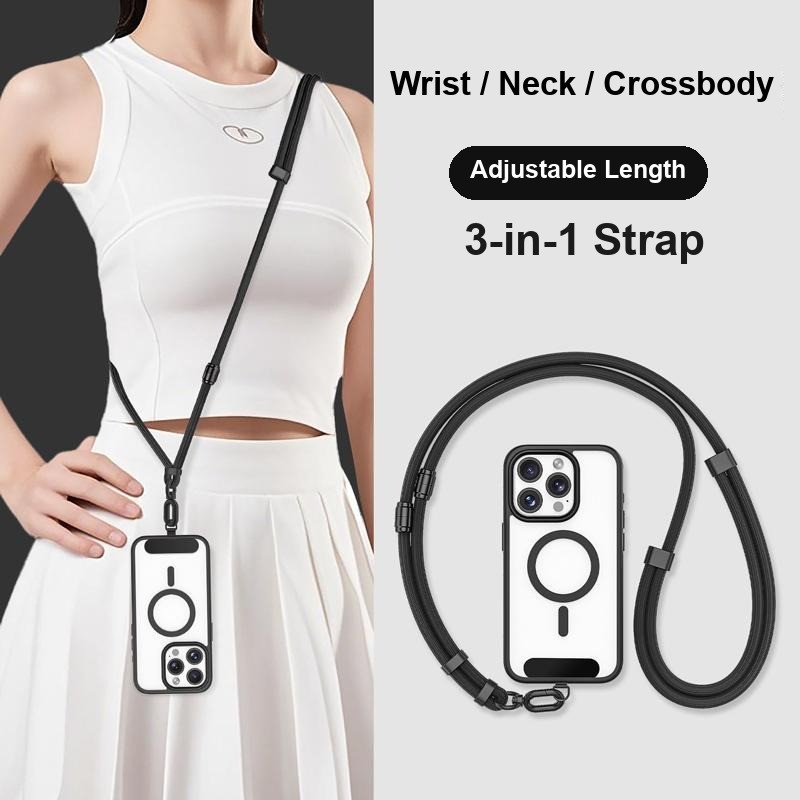
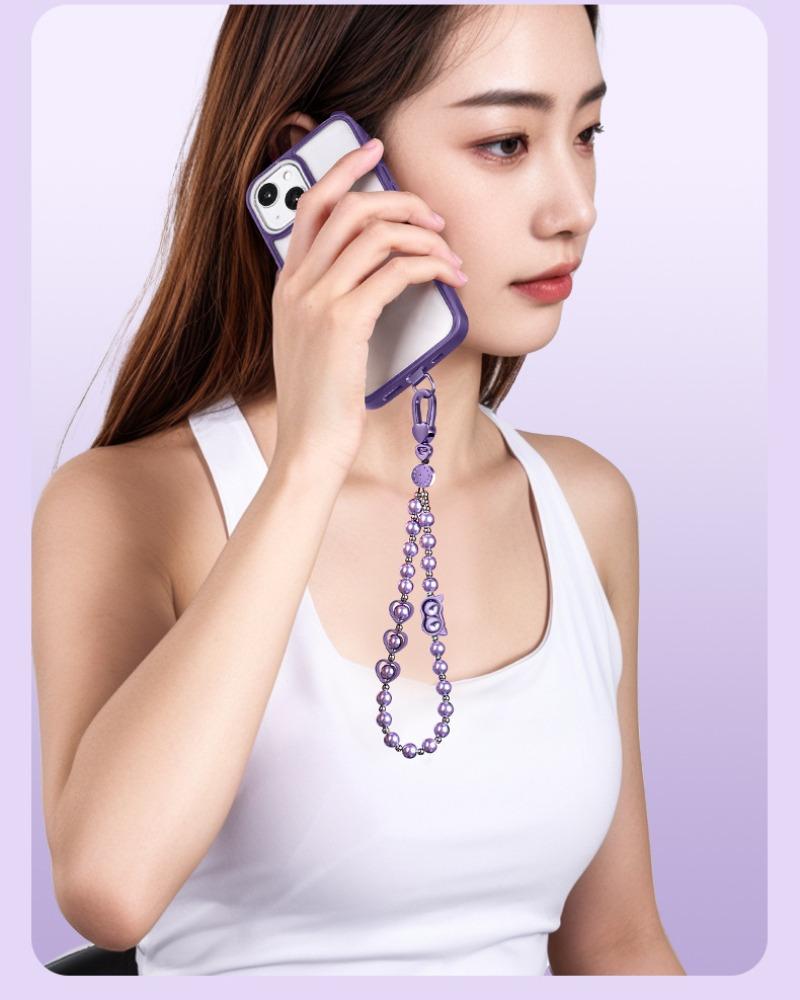
The short version: a phone lanyard order goes wrong at the specification stage far more often than at the price stage. Send a supplier a written spec sheet — cord or webbing, hardware, length, colour reference, logo method and packaging — and you get a comparable quote. Send a photo and the words “best price?” and you get five quotes for five different products. What follows is the checklist we use with buyers, in the order the decisions actually need to be made.
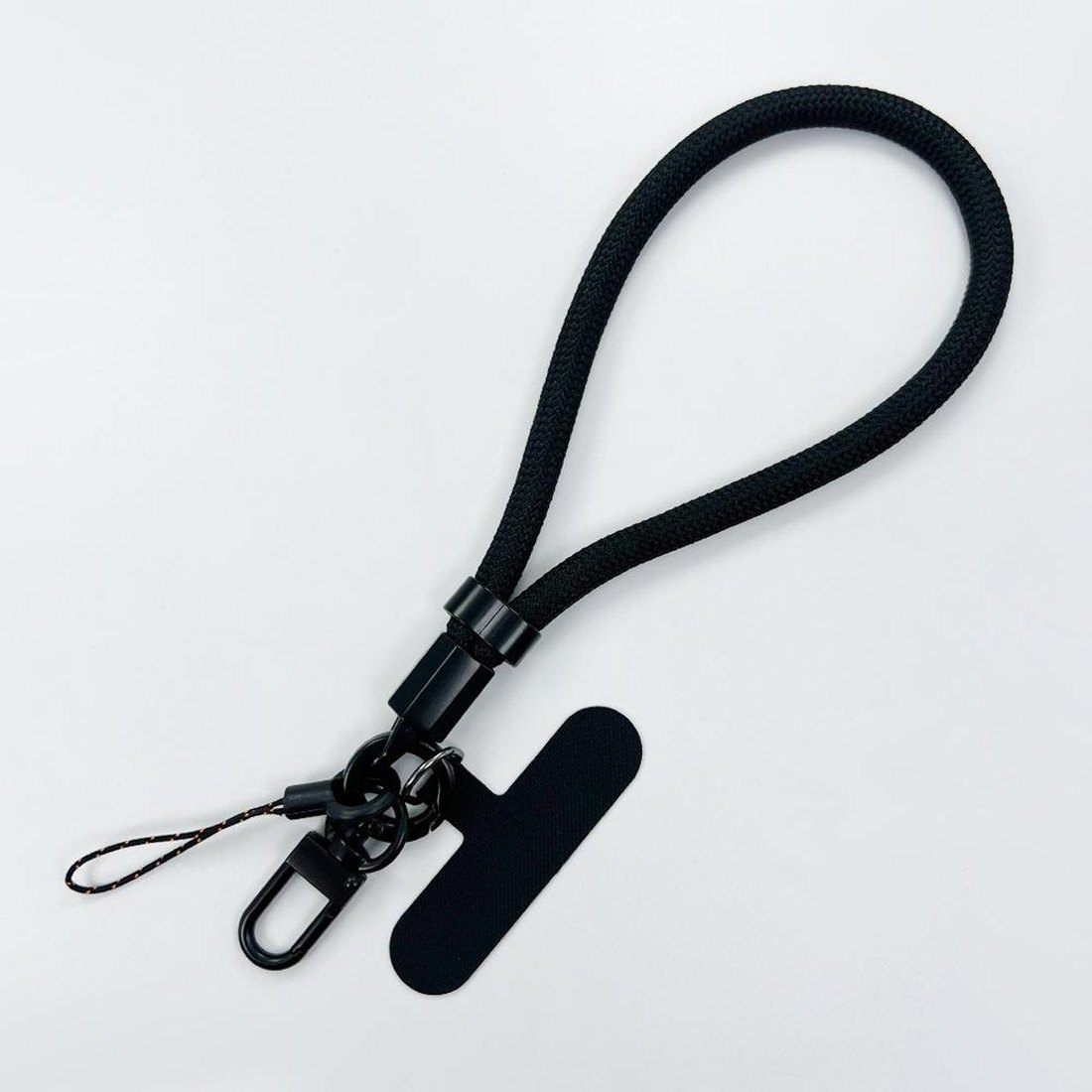
1. Start with a written specification, not a price request
Every order we take starts from a written specification. That is not bureaucracy — it is the only way two suppliers can quote the same thing, and the only way you can later prove a batch is wrong.
A specification also protects you on the second order. The most common complaint in this category is not “the first batch was bad” but “the second batch does not match the first one”. That happens when the first order was defined by a photo and a chat, and the second order was defined by memory.
2. What a usable lanyard spec sheet contains
Six fields. If any one of them is missing, the quote is a guess.
- Cord or webbing. Material (polyester, nylon, woven or jacquard webbing, silicone), diameter in mm, and weave or pattern. Our braided wrist styles use a 7 mm cord; woven mini bag styles use webbing, quoted by width.
- Hardware. Clip type, finish (matte, nickel, gold-tone, rose-gold), and whether it rotates. A 360° swivel hook, a fixed clip and a slider are three different costs and three different use cases.
- Length and adjustment range. A wrist strap is not a length — it is a length range. Wrist styles sit around 30 cm; neck and crossbody styles run from about 55 cm up to 160 cm depending on the model.
- Colour reference. A Pantone number, or a physical sample. Screen colours do not transfer.
- Logo method. Woven label, silk-screen print, silicone patch, laser engraving on metal, or heat transfer. Each has a different minimum and a different look.
- Packaging. OPP bag, backing card, gift box, or a retail-ready set with your barcode.
3. MOQ: what actually drives the number
Minimum order quantity is not one number, it is a ladder. The steps are driven by how much of the product has to be changed for you:
- Stock style, stock colours. Lowest tier — from 100 pcs. Nothing is re-tooled, only your logo or packaging changes.
- Stock style, custom colour. Higher, because the cord or webbing has to be dyed or woven to your reference.
- Custom shape, custom metal. Highest. Custom tether tab or anchor plate outlines, custom D-ring sizes and custom hardware generally start around 500 pcs, because the tooling only pays off at volume.
Practical takeaway: if you want to test a market cheaply, start from stock colourways and put your money into packaging and photos. Move to custom colour and custom hardware once you know which style sells.
4. Sampling: stock sample versus pre-production sample
Two different things, and buyers mix them up constantly.
A stock sample shows you what an existing product feels like. Order it first, before you commit to anything. It answers the only question that matters at that stage: is this cord thickness and this hardware weight right for my price point?
A pre-production (PP) sample is made to your approved specification and your colour reference. Once you sign off the PP sample, that sample becomes the reference the production run is checked against. Keep it. Retained samples are how a reorder stays consistent with the batch you approved.
5. Lead time: the part buyers underestimate
Total lead time is sampling plus production plus shipping, and sampling is where the schedule usually slips — not the factory floor.
For a private-label order with a custom colour and a printed logo, budget weeks rather than days for sampling: colour approval, logo artwork proof, and a physical sample in your hands. Our own standard figure for stock-to-private-label transitions is quoted as 15–20 days, and that assumes the specification is already frozen. Every unanswered question in the spec sheet adds a round trip.
Two things you can control: freeze the specification before sampling starts, and ask for the sample and the quote in the same conversation so you are not re-quoting after you fall in love with a sample you cannot afford.
6. Inspection: what to actually check on a lanyard
A phone lanyard is a small product with one critical area: the joints. That is where a lanyard fails, so that is where inspection should concentrate.
- Load-bearing joints. Where the cord or webbing meets the hardware, and where the strap meets the anchor. Check the knot or stitch reinforcement and pull it.
- Hardware fit. Does the clip open and close cleanly? Does the swivel rotate without binding? Does the slider hold position under tension?
- Stitch reinforcement. On woven and mini bag styles, check the seams at the pouch and the attachment points.
- Colour against the reference. Compare against the approved sample, in daylight, not on a screen.
- The anchor plate. On ultra-thin steel pads (we use 0.18–0.4 mm stainless steel), check for burrs and check that it sits flat without lifting the phone out of its case.
7. Private label, OEM and ODM: use the words precisely
These terms get used interchangeably in supplier conversations and that causes real disputes. As we use them:
- Private label — an existing product with your branding, colour and/or packaging. Fastest and cheapest.
- OEM — the product is made to your specification, which may mean a different cord, hardware, length or logo method from anything in the standard range.
- ODM — the supplier brings the design and you put your brand on it. Only use this word with a supplier who genuinely holds the designs and can prove it.
If a supplier uses all three words in the same paragraph without distinguishing them, that is information about the supplier.
8. Documentation: ask before you assume
Testing and documentation are agreed per product and per market, not per supplier. Before you build a listing that promises a certification, ask which specific documents are available for that specific item and that specific production partner.
A supplier who says “yes, all certificates available” is less useful than one who says “for this item we can provide X; for Y we need to check with the production partner”. The first answer is a sales reflex. The second one is a supply chain.
9. Red flags worth taking seriously
- Quotes that arrive without a single question about your specification.
- A price that is identical for 100 pcs and 5,000 pcs.
- No sample offered, or a sample fee that is not credited against the order.
- Vague answers about who actually manufactures the goods.
- Product photos that are obviously the same images used by several unrelated suppliers.
Where to go next
If you already know which format you need, the fastest route is to browse the category and send us the model number with your colour reference and quantity:
- Phone wrist straps — 7 mm braided cord, around 30 cm, adjustable slider or 360° swivel clip.
- Neck & crossbody lanyards — adjustable 100–160 cm in braided nylon and jacquard webbing.
- Mini bag lanyards — with a colour-matched detachable zip pouch.
- Finger ring straps and hardware — tether tabs, anchor plates and swivel hooks.
Not sure yet? Send us your requirement and we will come back with a specification and a sample plan.