The short version: braided cord and woven webbing are the workhorse materials — durable, cheap to colour, and the basis of most OEM programmes. Beads and charms sell on design and photograph better, but cost more per unit and need more care in assembly. Silicone is the comfort and softness option, best on wrist loops. Most successful lanyard ranges use two of the three, not one.
The four material families in this category
Almost every phone lanyard on the market is one of these:
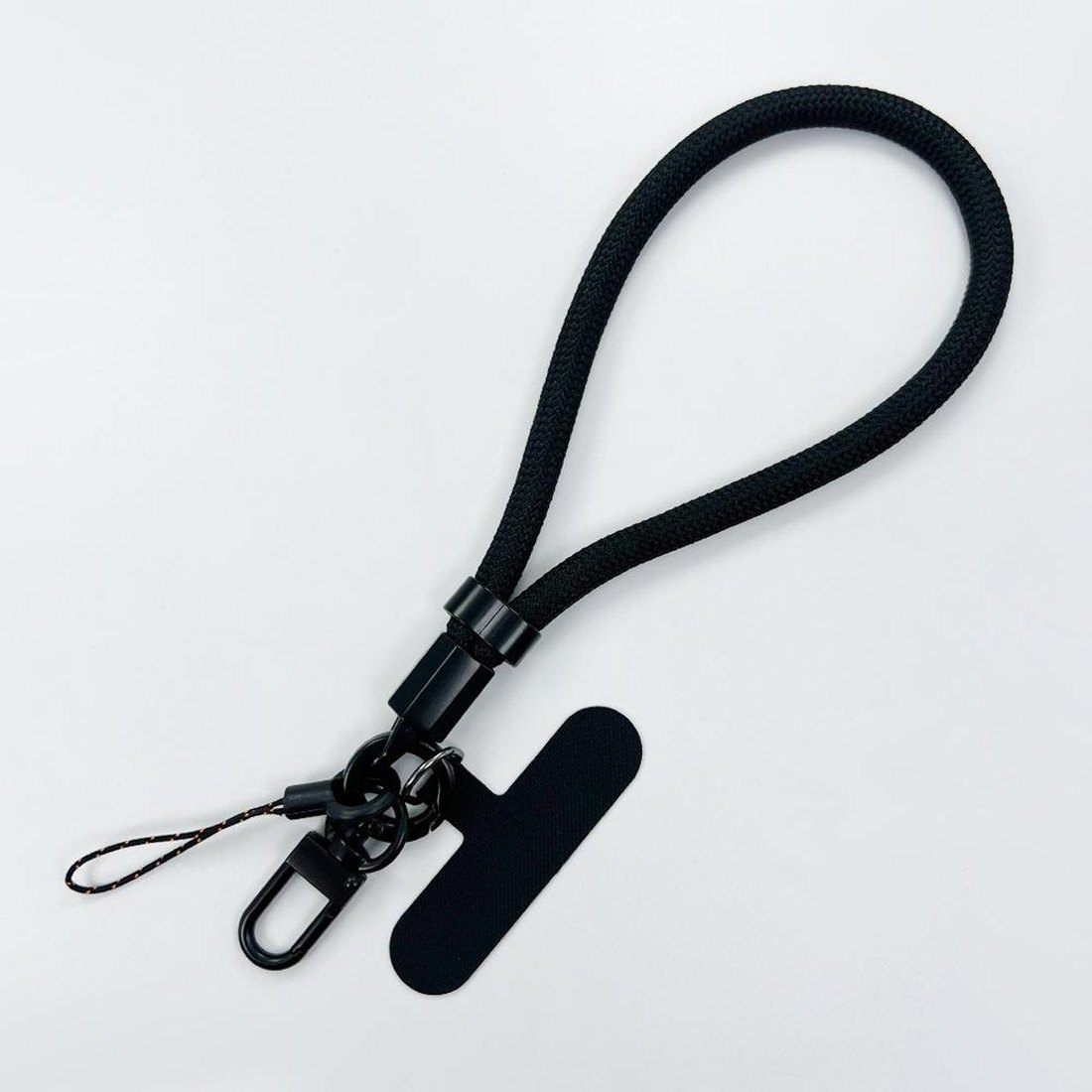
- Braided cord — polyester or nylon rope, braided. The default for wrist straps. Our standard braided wrist styles use a 7 mm cord.
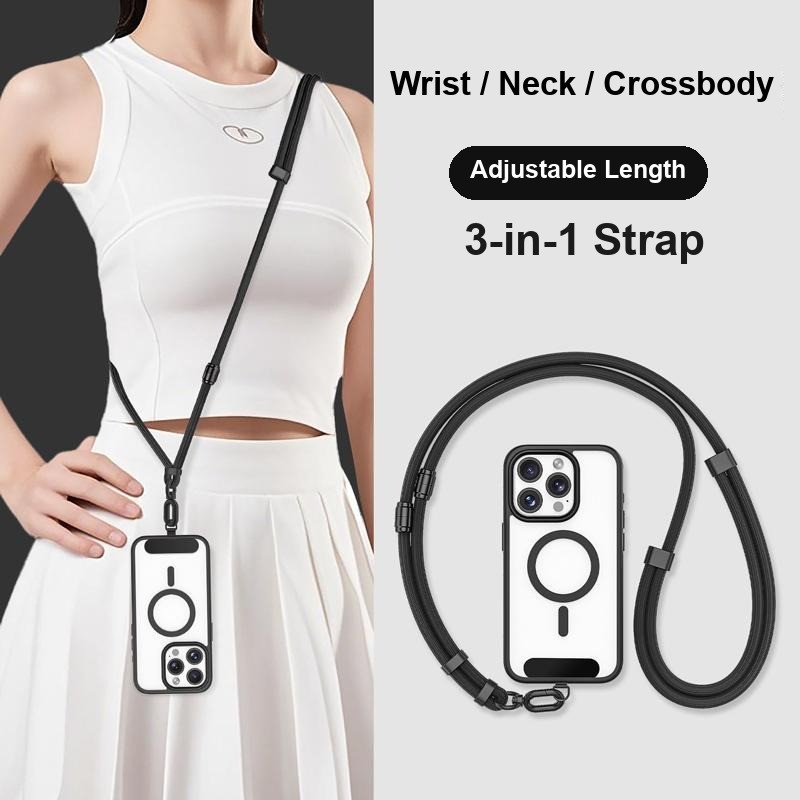
- Woven and jacquard webbing — flat woven strap, plain or patterned. The default for neck, crossbody and mini bag styles, where a flat strap carries weight better than a round cord.
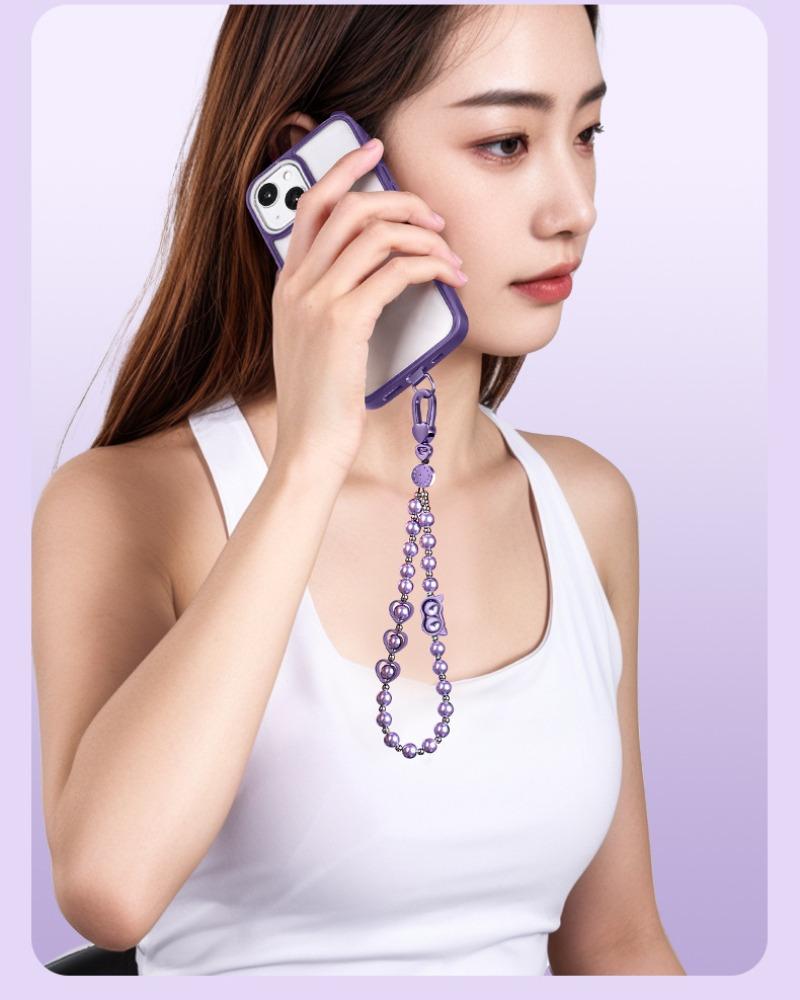
- Beads and charms — hand-strung assemblies using materials such as simulated pearl, crystal, enamel and zinc-alloy components, often on a cord or Dyneema core.
- Silicone — soft moulded wrist loops, often shaped (cloud, animal, character) and often paired with a rotating clasp.
Braided cord: the workhorse
Best for: wrist straps, high-volume private label, any range where colour range matters more than novelty.
Braided polyester and nylon take dye consistently, which is why colour-matching a braided strap to a Pantone reference is straightforward. The braid also hides wear well — a scuff on a braided cord disappears into the texture, whereas the same scuff on a flat webbing strap is visible.
What to specify: material, cord diameter, and the hardware it terminates in. A slider or a 360° swivel clip transforms the same cord into two different products.
Woven and jacquard webbing: designed to be printed
Best for: neck lanyards, crossbody straps, mini bag straps, brand-pattern programmes.
Weaving lets you put a pattern, stripe or logo directly into the strap rather than printing on top of it. That is why jacquard webbing shows up on retro and heritage styles: the pattern is structural, not applied, so it does not fade or crack.
The trade-off is that woven patterns have a minimum. A plain webbing colour is cheap to change; a custom weave is a loom setup. Practical advice: use weave patterns on the styles that carry your brand identity, and plain colours everywhere else.
Beads and charms: design-led, assembly-led
Best for: fashion-forward ranges, gifting, higher price points, photography-led e-commerce.
Beaded styles sell on how they look. Materials in this group include simulated pearl and crystal, enamel components, carved beads and zinc-alloy accents, often with a stepped stainless steel clip so the phone can still charge without removing the strap.
Two practical notes. First, beaded styles are assembled rather than extruded, so the cost per unit tracks the bead count and the assembly time — not just the material. Second, they need more careful quality control on the stringing and the knots, because the failure mode is a bead coming loose rather than a cord breaking.
Silicone: softness first
Best for: wrist loops, kid-friendly and lifestyle ranges, any product where comfort on the wrist is the selling point.
Silicone is soft, skin-friendly and mouldable into shapes that braided cord simply cannot be. A moulded cloud or character loop is instantly recognisable in a thumbnail, which matters on marketplaces.
Limits worth knowing: silicone colour-matching is less precise than cord dyeing, moulded shapes require tooling, and a soft loop feels less secure to some users than a braided one. Silicone works best as the comfort option in a range that also includes a braided style.
How to choose: a four-question filter
- Is the selling point feel or look? Feel points to silicone and braided; look points to beads and jacquard.
- How many colours do you need? If the answer is “a lot”, stay with braided cord and plain webbing.
- What is the price band? Braided and plain webbing support entry price points; beaded and moulded styles support premium ones.
- Who assembles it? Beaded styles need more assembly steps and therefore more quality control. Plan for that before you commit to a large beaded order.
Care and durability in real use
All four families survive normal daily use if the joint quality is right. The differences show up in specific situations:
- Sun and salt water — plain braided cord and webbing age better than bright dyed jacquard patterns.
- Repeated attach and detach — put the money into the connector, whichever material you choose.
- Handling and abrasion — braided and matte hardware hide marks best.
- Cleaning — silicone wipes down easiest; beaded styles need more care.
Where to go next
- Phone wrist straps — braided, beaded and silicone styles side by side.
- Finger ring straps — handwoven and carved-bead designs.
- Neck & crossbody lanyards — woven and jacquard webbing.
- Sourcing guide — how to put material choice into a spec sheet.