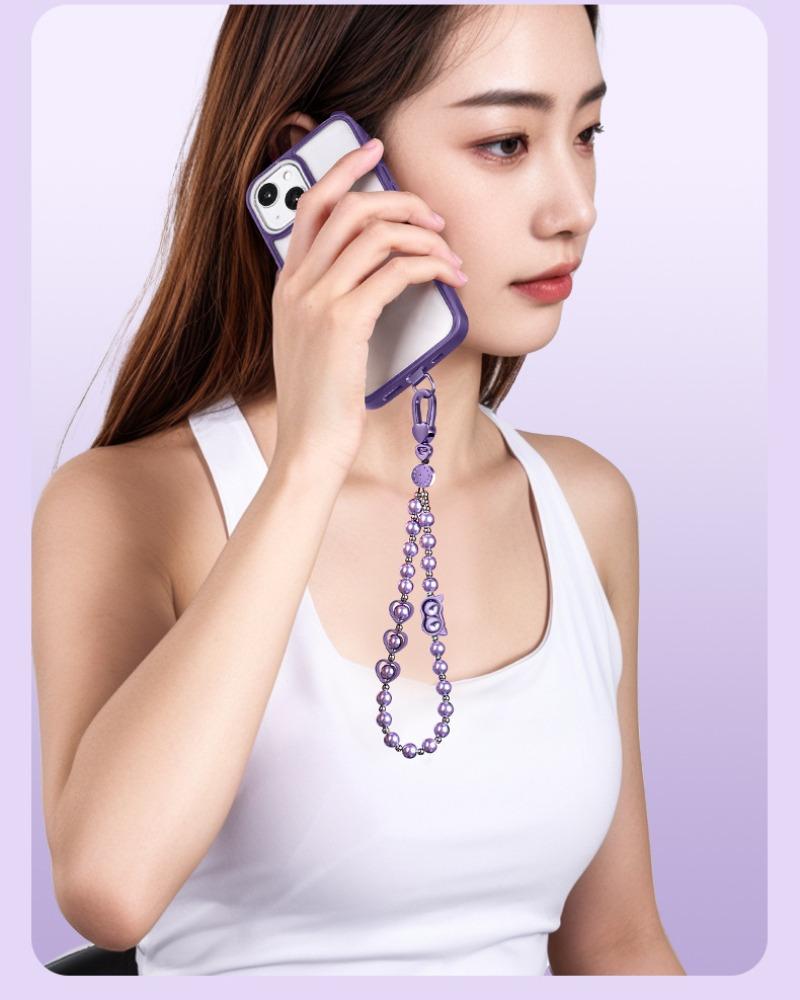
The short version: wrist straps are for people who want the phone in their hand within a second. Neck lanyards are for people who want both hands free and the phone visible. Crossbody straps are for people carrying a phone all day, often with a pouch, and willing to wear it like a bag. If you cannot choose, sell the adjustable 3-in-1 styles — one strap that does all three. The rest of this page is the detail behind that summary.
The three carry styles at a glance
The differences that matter to a buyer are length range, hardware and how the phone is anchored.
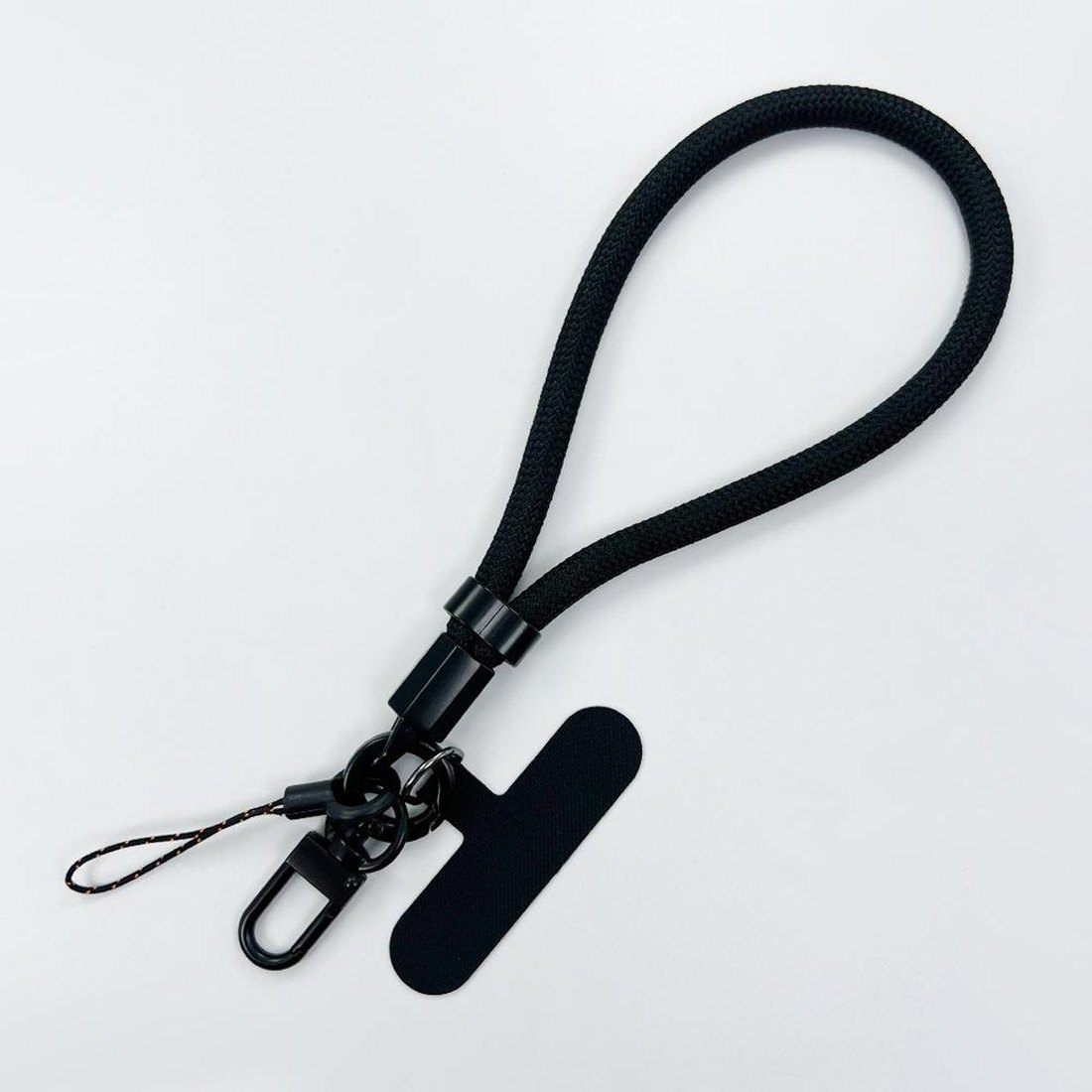
- Wrist strap — a short loop, around 30 cm, with a slider or a swivel clip. Anchored by a flat plate or T-patch that sits behind the phone case.
- Neck lanyard — adjustable, roughly 100–160 cm depending on the model. Hangs at chest height. Usually the same anchor hardware as a wrist strap, at a longer length.
- Crossbody strap — the same length band worn over the shoulder and across the body. Often wider webbing and often paired with a detachable pouch.
Notice that neck and crossbody are frequently the same product at different lengths. That is why so many of our styles are sold as “neck & crossbody” rather than as two separate lines.
Wrist straps: the one-second-access format
The wrist strap is the format people actually keep using, because it never gets in the way. The phone stays in your hand, the loop stops it hitting the pavement.
What to look at when choosing one:
- Cord diameter. Our braided wrist styles run a 7 mm cord. Thinner cord feels lighter but sits harder against the wrist.
- Adjustment. A slider lets the loop tighten to the wrist. Without one, the loop is either loose enough to be comfortable or tight enough to be secure — rarely both.
- The anchor. This is the part that actually fails. A thin stainless steel plate, in the 0.18–0.4 mm range, threads between the phone and the case without lifting the case off the phone.
- Charging. Some anchor plates are stepped so the phone still charges without removing the strap.
See the full line on our phone wrist straps page.
Neck lanyards: hands free, phone visible
A neck lanyard solves a different problem: you need both hands and you do not want the phone in a pocket. It is the format for trade shows, warehouse floors, retail staff, photographers between shots, and anyone who constantly reaches for their phone.
Three things separate a good neck lanyard from a frustrating one:
- Adjustability. Body heights vary enormously. A fixed length that works for one buyer's market will not work for another. Our adjustable neck styles cover roughly 100–160 cm.
- Weight distribution. A wide webbing strap spreads the load better than a thin cord over a whole day.
- A proper buckle. A threaded locking buckle or a security buckle stops the length drifting as the strap moves.
Browse neck & crossbody phone lanyards.
Crossbody straps: wear it like a bag
Crossbody is what happens when the phone becomes part of what you are carrying rather than something you are holding. It is the format that pairs naturally with a pouch — cash, cards, keys and earbuds stop living loose in a pocket.
The trade-off is bulk. Crossbody straps are longer, often wider, and need a bigger anchor or a stronger clip because there is more strap weight above the phone. If you are building a crossbody range, plan the hardware first.
Our mini bag lanyards pair a crossbody or shoulder strap with a colour-matched detachable zip pouch, so the same strap can ship as a two-piece set or as a plain lanyard.
Adjustable & 3-in-1: one strap, three formats
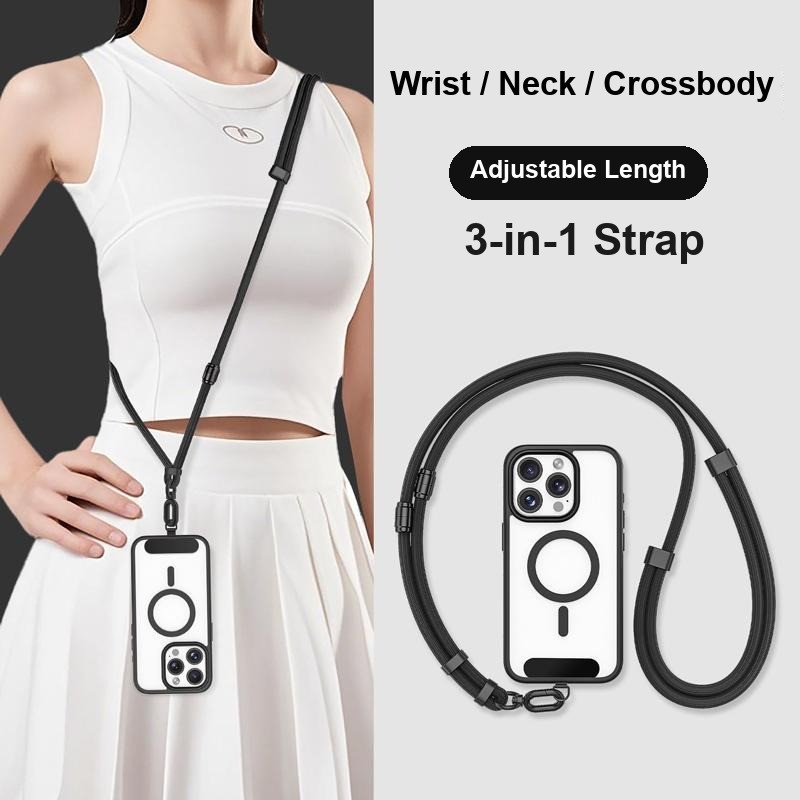
The commercially smartest option for a range that cannot stock everything is the convertible style. A 3-in-1 strap runs about 30 cm as a wrist loop and extends to 100–160 cm as a neck strap or crossbody sling, with a rotating connector and a security buckle.
For a buyer this means one SKU covers three use cases, which reduces stock risk and simplifies the listing. For an end customer it means the product adapts as their day changes. Both are good reasons the convertible formats are usually the best sellers in a lanyard range.
How to choose for your market
Three questions, in this order:
- Who is wearing it, and for how long? Short bursts and one-handed use point to wrist. All-day wear points to crossbody.
- What else do they carry? If the answer is “a bit of everything”, the pouch format does more work than the strap format.
- What is your price ladder? Stock-colour wrist styles let you open at a low price point; 3-in-1 and mini bag formats support a higher one.
If you would rather see the whole range side by side, start at all product lines, or tell us your target market and price point and we will suggest a starting assortment. MOQ on stock colourways starts from 100 pcs.