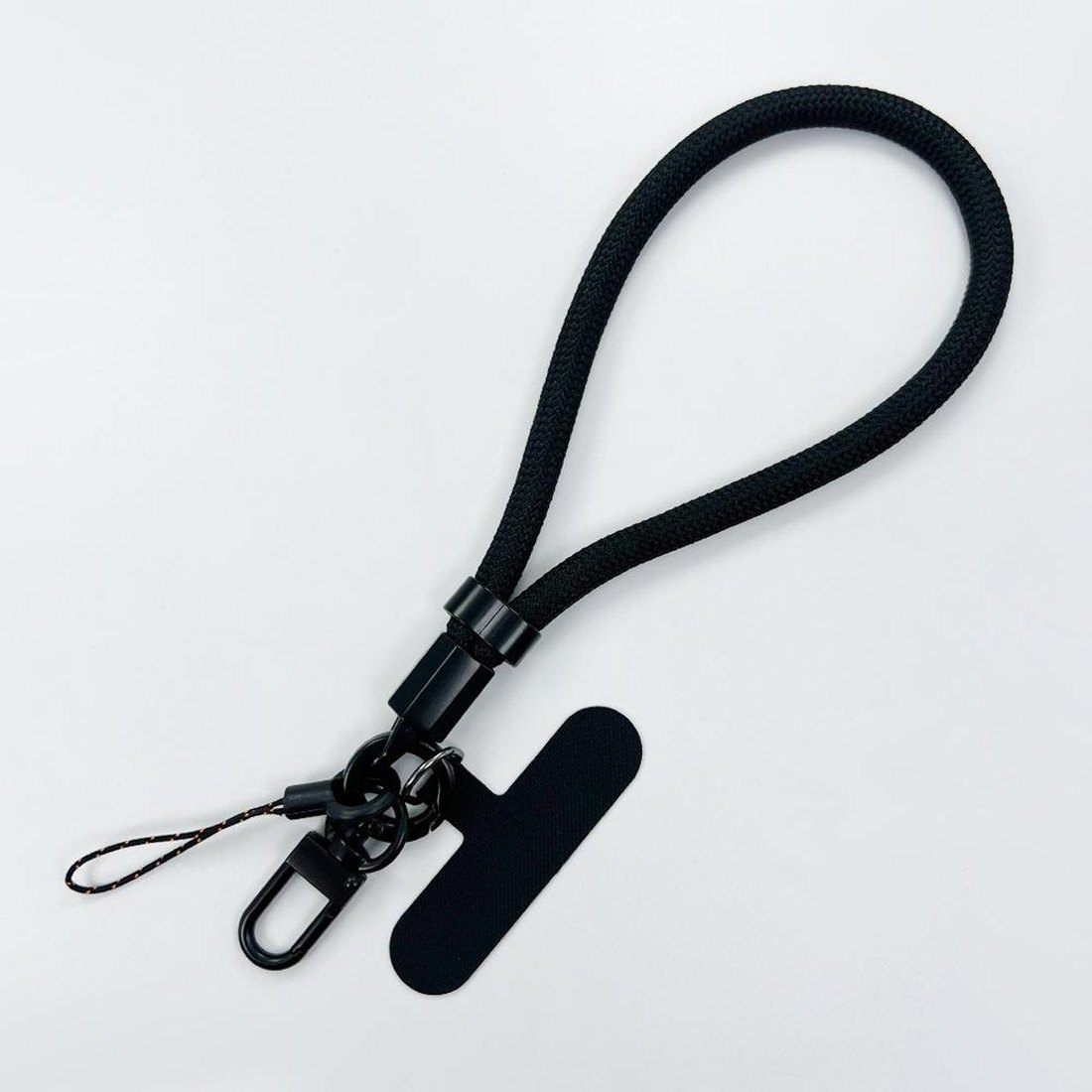
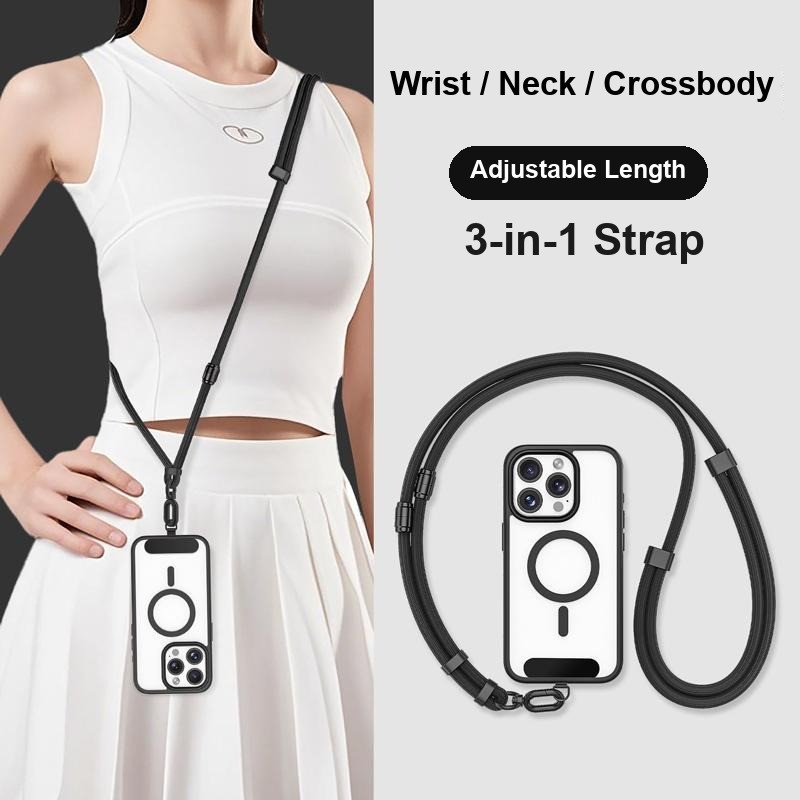
The short version: travel is the single best use case for a phone lanyard, because travel is when you are holding the most things and have the least free hand. At security you need both hands. In transit you need the phone but not in your hand. And a lanyard with a pouch keeps passport-adjacent items next to the phone. Here is how the formats map onto a trip.
The travel problem: too many things, too few hands
Airports, stations and transit hubs all put you in the same situation. You are managing a bag, a document, a boarding pass and a phone, usually while walking, often while being asked a question. Something gets put down, and something gets left.
A phone lanyard does not add capacity. What it does is remove the phone from the list of things you have to hold, which is the item people most often reach for and most often put down.
At security: the hands-free advantage
Security checks are the moment a lanyard pays for itself. You need to remove a laptop, a belt, sometimes shoes, and place items in a tray — all while holding a phone and a passport.
A wrist strap keeps the phone attached to you while your hands are busy. A crossbody strap goes one better: the phone stays on your body through the whole process, and you never have to decide where to put it down.
The practical detail that matters here is the anchor connection. A thin stainless steel plate or tether tab, in the 0.18–0.4 mm range, threads between the phone and its case so the strap can stay on while you use the phone normally — and it will not lift the case off or block the charging port.
In transit: crossbody beats pocket
On a plane, a train or a bus, the pocket is the worst place for a phone. It is unreachable when seated, it falls out when you stand up, and it puts pressure on the phone when you sit.
A crossbody or neck strap solves all three. The phone is reachable without standing, visible without digging, and it stays on you when you fall asleep — which is when most travel phone losses actually happen.
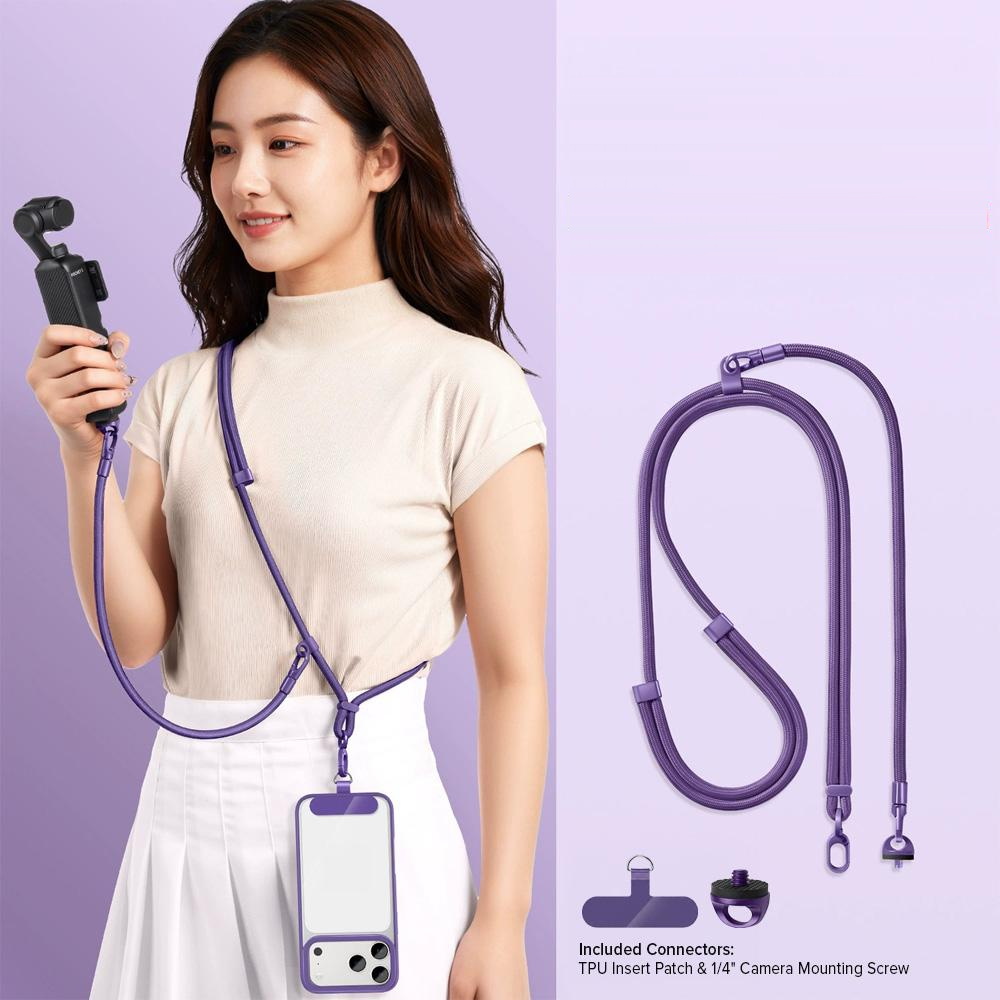
Adjustability is what makes this work across different people and different seating. Our adjustable neck and crossbody styles cover roughly 100–160 cm, which is enough range to move between a short neck strap and a full crossbody fit without changing product.
Keep the small things with the phone
The other half of the travel problem is the loose small items: cards, a hotel key, cash, earbuds. These are the things that fall out of pockets in transit.
A mini bag lanyard pairs a shoulder or crossbody strap with a colour-matched detachable zip pouch, so the phone and the small items travel together. Several of our styles use a blocking liner in the pouch as well, and the pouch detaches — so the same strap works as a plain lanyard once you are through the airport.
For photography-heavy trips, a convertible style does double duty: a 4-in-1 strap that carries a camera or a phone on the wrist, the neck or cross-body, with a mounting screw for a pocket gimbal.
What to look for in a travel lanyard
- Adjustability over a wide range. Travel means different clothing layers and different body positions. A fixed length will be wrong for half of them.
- A security buckle or a threaded locking buckle. So the length you set in the morning is still the length you have at the gate.
- A 360° swivel or anti-tangle hook. Under a jacket or a scarf, a non-swiveling strap twists into a knot.
- Hardware that does not catch. Matte finishes handle constant handling better than high-polish ones.
- A detachable pouch. So one product covers the whole trip, from the airport to the evening.
Building a travel lanyard range
If you are assembling a travel-focused assortment to sell, the fastest route is three positions:
- An entry wrist strap — low price point, easy impulse purchase at the airport or in a travel accessory aisle.
- An adjustable 3-in-1 or neck/crossbody strap — the middle of the range and the one most people actually want for a trip.
- A mini bag lanyard with a detachable pouch — the premium position, and the one that photographs best.
Stock colourways start from 100 pcs, so a three-position travel range can be tested without a large inventory commitment. Custom colours, custom webbing prints and custom metal generally start from 500 pcs.
Where to go next
- Neck & crossbody lanyards — the core travel format.
- Mini bag lanyards — strap plus detachable zip pouch.
- Phone wrist straps — the entry position.
- Connectors & hardware — anchor plates, swivel hooks and tether tabs.